We've moved


The Aesthetica Blog has moved:


Wednesday, 21 December 2011

The Best Features from Aesthetica 2011 - In Pictures


This year the arts have been subject to a double squeeze – big falls in business contributions to the arts (making the renewal of BP’s sponsorship deal with Tate even more contentious) coupled with the much documented cuts to funding from the public sector, despite this visitor numbers at galleries have remained stable, highlighting that there is still much to celebrate. Three new public galleries have opened to great success: the Hepworth in Wakefield, the Turner Contemporary in Margate, and Firstsite in Colchester, whilst White Cube opened a third space in October. Perhaps in relation to the Turner Prize at Baltic, Nicholas Serota noted an increase in appetite for contemporary art across the country, which should come as no surprise given the quality of exhibitions coming out of galleries at the moment. At Aesthetica, we have spent 2011 doing what we do best, but better. In November, we launched our film festival, ASFF to great success and to top it all off, we extended the current issue of the magazine to include over 100 pages of visual content.

This was a good year. We've racked our brains to choose our favourite exhibitions and features from the magazine in 2011:

Issue 39: February/March
Susan Hiler: The Collective Conscience
The artist who needs no introduction takes over London with a massive retrospective at Tate Modern and new works at Timothy Taylor Gallery.

Read the article for free here.


Issue 40: April/May
A Reaction to Globalised Production: Making is Thinking
15 international artists exhibit at Witte de With Center for Contemporary Art in Rotterdam, in a ground-breaking exhibition exhibition that deciphers new meaning within the difference between making and thinking.

Read the article for free here.


Issue 41: June/July
Transgressing Conventional Boundaries: Bruce Nauman
Kunsthalle Mannheim celebrates Bruce Nauman's 70th birthday with a retrospective examining the artist's fascinating body of work.

Read the article for free here.


Issue 42: August/September
A Survey of the Postmodern: Postmodernism Style and Subversion 1970-1990
With 20 years hindsight, the V&A's autumn blockbuster is the first major show to survey the visual products from the postmodern era.

Read the article for free here.


Issue 43: October/November
Photographic Dialogues
Photophnompenh: 4th Edition, Various Locations
Cambodia, 26 November - 3 December


For the forth consecutive year, PPP will present a programme of 30 exhibitions that aim to increase the dialogue between Europe and Asia. As in previous years, there is no dominant theme to the festival, but a selection of exhibitions that provide a genuine discussion on ideas such as the visual environment of Phnom Penh, its architecture and landscape. In its representation of a broad spectrum of narratives, PPP offers a unique glimpse into contemporary Cambodia and how local and projected modes of artistic production form part of the wider global dialogue.

Buy the issue, or download the article here.


Issue 44: December/January
History In Context: Zarina Bhimji
The first major survey of three decades of Zarina Bhimji's highly emotive work, and the premiere of her new film, Yellow Patch, opens at Whitechapel Gallery, London in January.

Buy the issue, or download the article here.

Aesthetica Magazine
We hope you enjoy reading the Aesthetica Blog, if you want to explore more of the best in contemporary art and culture you should read us in print too. You can buy it today by calling +44(0)1904 479 168. Even better, subscribe to Aesthetica and save 20%. Go on, enjoy!

Captions:
1. Susan Hiller
Monument 1980-1
Tate © Susan Hiller, 2010. Courtesy Timothy Taylor Gallery, London
2. Eva Rothschild, SUPERNATURE, 2008
Courtesy of the artist & The Modern Institute / Toby Webster Ltd., Glasgow
Installation photo Witte de With 2011: Bob Goedewaagen
3. Bruce Nauman
Double Poke In The Eye II 1985
Friedrich Christian Flick Collection in Hamburg Bahnhof. Photo by Stefan Altenburger, Zurich.
Courtesy of VG Bild-Kunst, Bonn 2011.
4. Arata Isozaki
Team Disney Building 1989-90
Orlando, Florida.
Photograph by Victoria Slater-Madert
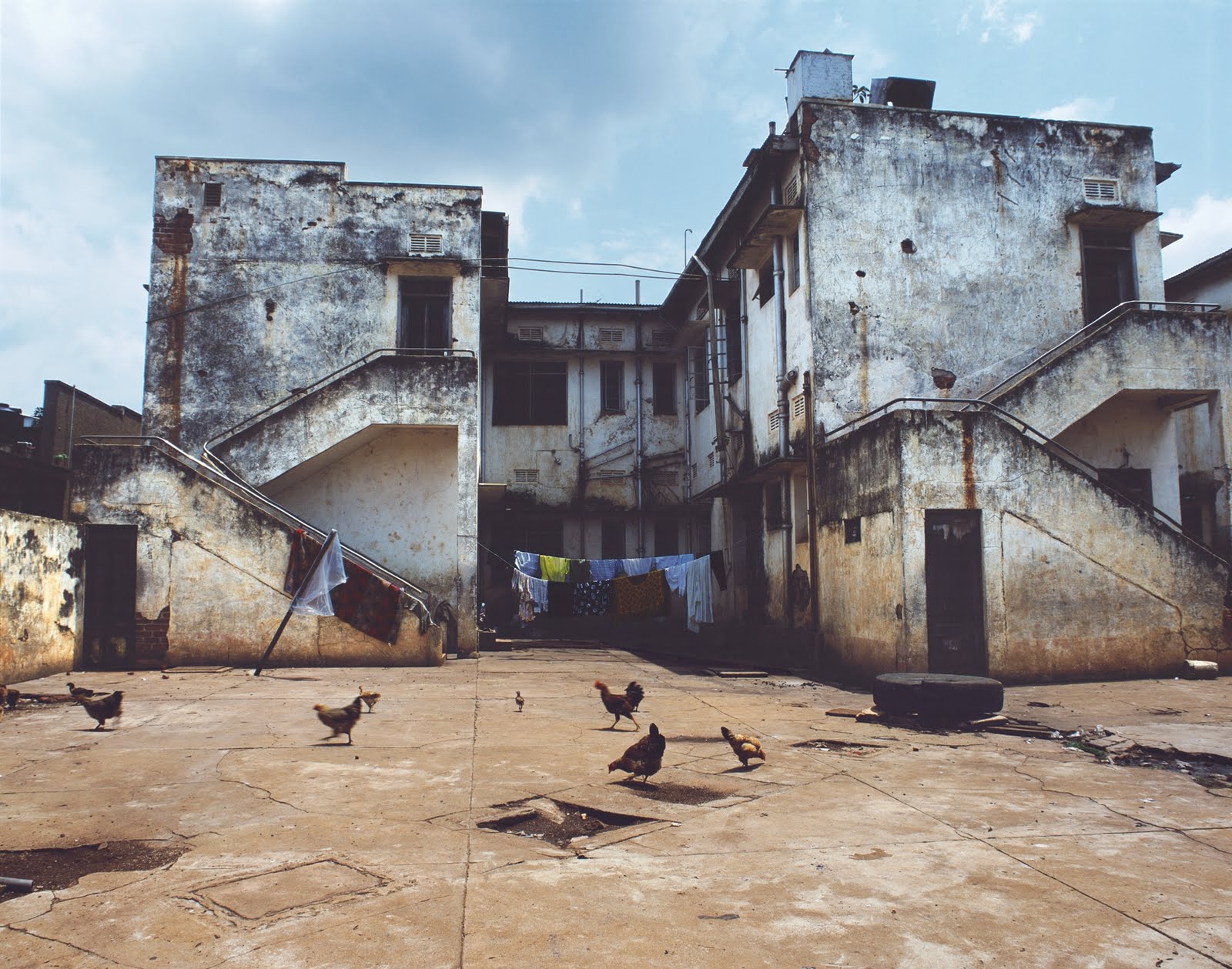
5. Alexander Gronsky
From the series Edge 2008
Courtesy VU'la Galerie, Paris
6. Zarina Bhimji
Your Sadness is Drunk 2001-2006
Ilfochrome Ciba Classic pRINT
Courtesy the artist

Tuesday, 20 December 2011

Dislocated Flesh | Julien Ottavi & Jenny Pickett | Tenderpixel Gallery | London


Text by Bethany Rex

Dislocated Flesh features the work of Julien Ottavi and Jenny Pickett. This new body of work stems from their long term collaboration exploring perception, memory and architecture. Considering physical and virtual space they are intrigued how these phenomenons influence the body, particularly in a post-human construction of society. Aesthetica spoke to Julien and Jenny about their collaborative practice:

A: When did you meet and how long after did you start to work together on your projects?
JP: Julien Ottavi and I met briefly in 2007 at DEAF - the Dutch Electronic Arts Festival. I was collaborating on a tactical media project with the artist Sunshine Frère which involved gifting hacked objects for the purpose of again reconfiguring or recording by peers. One of these objects ended up in the hands of APO33 and Julien Ottavi, we were subsequently invited to participate in ECOS rencontres in Nantes in 2007. Here Julien and I met again and go on like a house on fire. We began to exchange immediately and planning collaborations from early 2008.
JO: We are working all the time together, the ideas and projects that we come across circulate in a fast flow of exchange through practices. Our collaboration started really quickly after we met.

A: Your work explores physical and virtual space in a post-human construction of society. Does this mean that your work focuses on science fiction or the speculation on future developments in science?
JP: There is definitely an element of science fiction and/or technological, scientific futures that arise through the subjects and materials we work with, however as a focus we find the human condition or conditioning vastly complex, historically rich and still relevant to current social and political aesthetics.
JO: The concept of post-human is not only coming from science-fiction, unfortunately we are already post-human. We have somehow re-created a new environment, we are seeing the world through different filters: machines, digital, networked, speed, flying, and so forth. Our bodies have mutated through pollution, ready-made foods, GMO, preservatives, medication, prosthesis, machine parts that let us live longer and much more. The virtual space is already a place that has its own life, where odes, worms, viruses and other avatars "live". Our work questions the "reality" that surrounds us, our future is embedded in the questions we asses in our artistic work.

A: What was the inspiration between Possession, a suspended human scale cocoon-like sound sculpture?
JO: This work has multiple roots but predominantly conjures the sense of an "in between" state of being. The cocoon is a form potentially containing all the others forms, it’s a representation of what is coming, it’s a gate between our past and our future through an instant (the flash), it is also a digestive system that transform one thing into another state. Possession is this state of becoming that goes beyond our inherent condition.
JP: The form, materials, sound and flashes of Possession could be read on a number of different ways and produce various narratives from protection, transformation, desire, aspirations and emergence. Our inspiration comes from a marriage of retinal traces, intestinal echoes and nature as we try to uncover or discover a transition, prolong an instant or discharge a reflection.

A: What experience do you hope this will create for the viewer?
JO: In Possession, there is an intense flash that almost blinds the viewer so quickly that he doesn’t know what happening, he is attracted and is slightly afraid. The cocoon represents a hidden side of our psychology. It is also a beautiful sculpture hanging in the gallery, as mystery that suddenly hatched.
JP: Possession is a large looming and tactile object in the Tenderpixel Gallery’s modest space. The sound is quiet yet intense and may cause some people to feel uncomfortable in the space, but it can also draw the viewer in to listen more closely. Then there is the light and the overall experience is perhaps perplexing but we would hope for visitors to spend a little time to contemplate this work, its ideas and meanings.

A: Moving on to the other work in the exhibition. Could you talk us through this?
JO: Radotage is a piece that brings the obsession of being in a loop, all those wigs turning endlessly, scratching the surface of a cymbal. It creates a space for listening that is both minimalist sound and repetitive visually creating a worrying strangeness.
JP: Radotage has a haunting appeal to it both sonically and visually. The piece is a reflection on aging, narrative memory and entrenched loops. Loosely translated Radotage means drivel. On another level Radotage plays with ideas of composing with these repetitive behaviours, live sampling and importantly the disturbances and difference.

A: What exhibitions are you looking forward to seeing in the coming months?
JP: I would like to catch the Anselm Kiefer show at White Cube (9 December 2011 - 26 February 2012) and Elsa Tomkowiak at Le FRAC (Fonds Régional d'Art Contemporain des Pays de la Loire) in Nantes (19 November 2011 - 22 January 2012).
JO: For me it's Memories of The Future, the Olbricht Collection (22 October 2011 - 15 January 2012) at La Maison Rouge, Paris.

A: Finally, what projects can we look forward to from you in the future?
JO: For the coming year, we are preparing a couple of projects, residencies for the spring but nothing is official for the moment. We are also working with videos/film and one of our films will be shown in March 2012 at Experimental Intermedia in New York City. In addition we have lots of performances coming up: Subtecture, Great Steaming Orchestra, Block2030, Apo33, amongst others.
JP: In addition to our personal practice we are working on different projects with our Association APO33: Open Sound Group is a European sound art network with artist run organisations from seven countries: Modus (UK), Live!iXem (Italy), Granular (Portugal), Audiolab Arteleku (Spain), Piksel (Norway), NK (Germany) and APO33 (France). We will also be working with Upstage, a virtual stage (online) along with other European partners we are collaborating on realising a new updated version of this platform which has been producing an annual online festival since 2007 for Live Networked Performances.

Dislocated Flesh by Julien Ottavi and Jenny Pickett, 02/12/2011 - 22/12/2011, Tenderpixel Gallery, 10 Cecil Court, London, WC2N 4HE. www.tenderpixel.com

noiser.org
jennypickett.co.uk

Aesthetica Magazine
We hope you enjoy reading the Aesthetica Blog, if you want to explore more of the best in contemporary art and culture you should read us in print too. You can buy it today by calling +44(0)1904 479 168. Even better, subscribe to Aesthetica and save 20%. Go on, enjoy!

Caption:
Courtesy the artist

Monday, 19 December 2011

Stretching the Physical Limitations of Art | Mark Handforth: Rolling Stop | MOCA | North Miami


Text by Heike Wollenweber

Mark Handforth’s (b. 1969) Rolling Stop opened at the Museum of Contemporary Art in North Miami, for Art Basel Miami Beach. Curated by MOCA Executive Director Bonnie Clearwater, the exhibit of 25 works marks a major milestone for Handforth, MOCA and the Miami art landscape, as the Miami based sculptor rarely actually shows his work in Miami. The exhibition stretches the physical boundaries of Art Basel by showing in North Miami as opposed to Miami Beach, relating back nicely to Handforth's stretching of the physical limitations and space of art in his practice.

Born in Hong Kong, raised in England and schooled in Germany, Handforth chose to relocate to Miami in 1992 and has become part of its dynamic art scene. He understands the intrinsic functions and motions of city life, whether based on the past as in European cities or focused on the future as in the US metropolis. Handforth knows the Miami prior to the glamour that Art Basel brought and his intimate relationship with the original grittiness of the city feeds his work. His large sculptures and light fixtures are designed to be interpreted with a sense of humour as he changes the size and shapes or otherwise distorts everyday objects to make them visible and elevate what we see daily above a state of obscurity. Handforth was the first Miami artist to receive a solo show at the Joan Lehman Building of MOCA in March 1996. Rolling Stop coincides with the museum's celebration of its 15th anniversary in its current Joan Lehman Building. Since 1996, Handforth has received major international recognition and has emerged as an important role model for Miami artists, his work being exhibited at The Modern Institute (Glasgow), Galerie Almine Rech (Paris), Museum of Contemporary Art Chicago and the Whitney Museum of American Art.

The grandeur of the metropolis is mirrored in Handforth’s work. The physical aspect is reflected very literally in the often enormous size of the sculptures but Rolling Stop also continues Handforth’ urban discourse. He engages the viewer into a conversation with every day objects by making them larger than life, altering them to create something new rather than a depiction of something that already was. Handforth adds another dimension by placing these huge street signs, lamp posts or a gigantic wire hanger next to sculptures of stars, moons and light fixtures reminiscent of the cosmos.

Upon entering the exhibit one is first struck by its enormity and a feeling of having walked into a chapter of Gulliver‘s Travels. The second sensation is of being surrounded by light, fluorescent light and candle light, illuminating the exhibit in an almost surreal manner. After a few moments the eyes adjust and the shadows change the look of every sculpture in the room as the light makes the darkness visible. The main source of the light is Eclipse (2003), a light fixture of 100 fluorescent bulbs, practically exploding across 100ft of MOCA’s walls. Inspired by William Blake as well as Miami’s ubiquitous neon signs, it is an example of how Handforth combines personal experiences and influences of various geographical spaces into one work of art that is then no longer limited by any geographical or cultural boundary.

The Eclipse illuminates especially the Silver Wishbone (2010), a very prominent sculpture reminiscent of an ancient archaeological relic. Other light sources are Syd Barrett (2006), a trash can with tree branches and fluorescent tubes, as well as Vespa (2001), which occupies a niche by itself. The blue old-school scooter is covered in candle wax of every colour of the rainbow. The burning candles cover the piece in dripping lines of green, purple, yellow, blue and red and thereby alter the art continuously. Handforth himself sees his art as a never-finished process, open to change, ever moving and evolving. Ironically, the Vespa cannot move in its intended way as the wheels are immobile casts. The flickering of the candle light and the dripping wax is what keeps the art in continuous flux just like Rome, the city hat inspired Vespa.

Handforth takes his art beyond the expected and literally, beyond the intended space. He wants to see his work outdoors and part of the public space. For Rolling Stop the artist goes beyond the museum walls of MOCA with Herbal Hill (1998) in the museum courtyard, Electric Tree (1998-2011), a giant banyan tree in North Miami’s Griffing Park and the pink neon Weeping Moon (2010), a pink neon sign billboard in the Wynwood Arts District. Handforth’s choice of utilizing public space adds an additional layer of realism as well as an organic quality. The art becomes part of the ever changing environment and is shaped by its surroundings as much as it alters the space it inhabits. The art becomes part of a public domain and is no longer reserved to any elite. Without the limitations the art is no longer confined to being art.

Rolling Stop is an innovative exhibition of Mark Handforth’s works between 1996 and 2011. It brings his work to a rolling stop in the city that shapes his vision while he participates in the shaping of the city and its extraordinarily vibrant art scene.

Mark Handforth Rolling Stop, 11/29/2011 - 02/19/2012, MOCA, North Miami. www.mocanomi.org

Aesthetica Magazine
We hope you enjoy reading the Aesthetica Blog, if you want to explore more of the best in contemporary art and culture you should read us in print too. You can buy it today by calling +44(0)1904 479 168. Even better, subscribe to Aesthetica and save 20%. Go on, enjoy!

Captions:
1. Foreground: LampostSnake, 2011. Courtesy of the artist and Gavin Brown’s enterprise, New York.
Midground left: Blue Hanger, 2011. Courtesy of the artist and Gavin Brown’s enterprise, New York.
Midground right: Slow, 2005. Collection of the Dallas Museum of Art, Promised gift of Gayle and Paul Stoffel.
Background: Eclipse, 2003. Courtesy of the artist and Gavin Brown’s enterprise, New York.
2. Foreground: Silver Wishbone, 2010. Collection of the Speed Art Museum, Louisville, KY.
Background: Eclipse, 2003. Courtesy of the artist and Gavin Brown’s enterprise, New York.

Blog Archive